
Why the 20 Euro Cent Coin Holds Practical Weight
Value is not only numerical — it’s functional.
Circulation of the 20 euro cent coin began on January 1, 2002.
This denomination occupies a middle position within the medium-range exchange coins of the European monetary system.
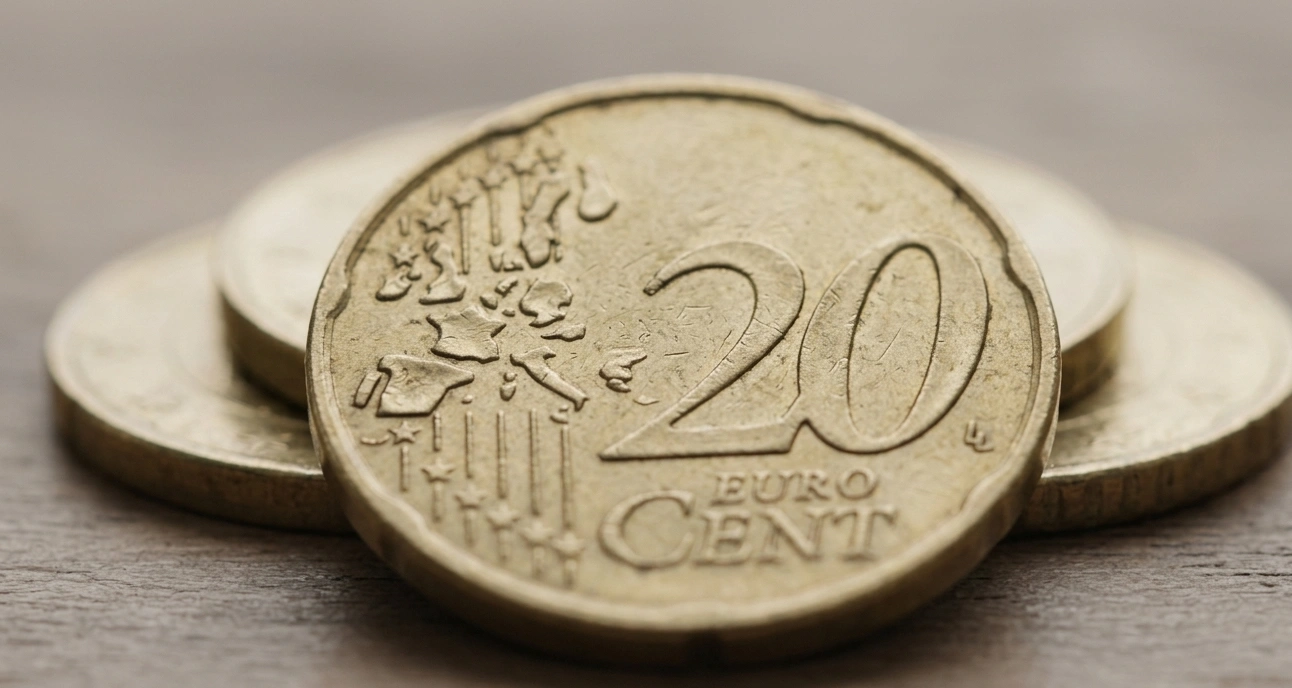
European Central Bank officials established strict standards for producing these currency units.
Vending machines and payment terminals require high precision in physical parameters to function correctly.
Data Category | Parameter Value |
Nominal Value | 0.20 € |
Total Mass | 5.74 grams |
Disk Diameter | 22.25 mm |
Edge Thickness | 2.14 mm |
Manufacturing Material | Nordic Gold |
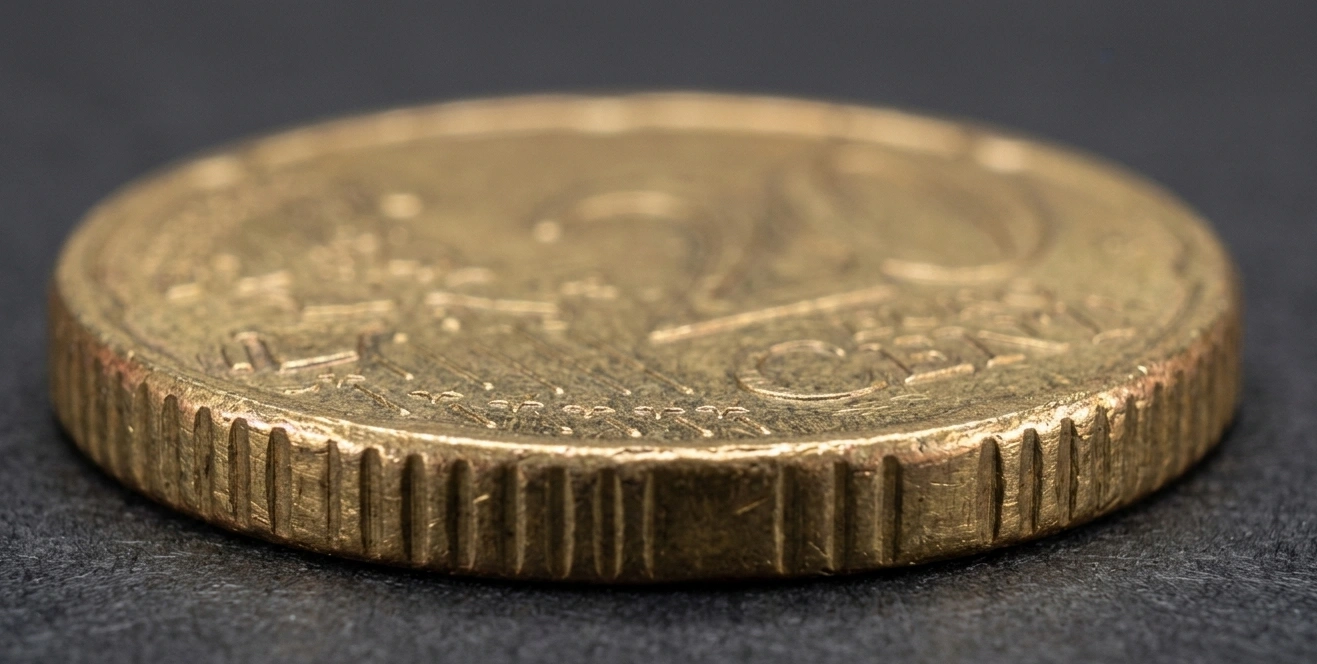
Rim Shape | Spanish Flower |
An alloy called Nordic Gold contains no actual gold.
Composition includes Copper, Aluminum, Zinc, and Tin.
A precise weight of 5.74 grams allows machine sensors to distinguish genuine coins from fakes immediately.
Seven indentations along the rim facilitate denomination identification for visually impaired individuals.
Production Dynamics by Country
Every Eurozone member mints a unique national side for the coin.
Common side designs were updated in 2007 to reflect the expanding borders of the European Union.
Mintage volumes for major emitting countries during the initial period appear below.
Germany (all mints combined) → approximately 2.3 billion units
France → over 1.1 billion units
Italy → roughly 1.3 billion units
Spain → about 1.1 billion units
Massive circulation numbers ensure high liquidity across all union members.
National symbols on the reverse do not restrict the coin's usage outside the issuing country.
Market Indicators and Collector Value
Most 20 euro cent coins retain a value of exactly 0.20 €.
Inflationary trends observed in 2024–2025 did not change the market status of ordinary circulated specimens.
Price growth appears only within segments involving rare years or minting errors.
Value shifts for rare Vatican and Monaco issues →
2020: 15.00 € ↓ 2022: 18.50 € ↓ 2024: 24.00 € ↓ 2026: 32.00 €
Average annual appreciation for rare series reaches approximately 12–15%.
Coins in MS67 condition show a 5% increase due to the shrinking supply of perfectly preserved items.
Technological Minting Errors Analysis
Manufacturing mistakes transform standard payment tools into valuable assets.
Equipment failures during the striking process create several defect types.
Wrong Planchet
Errors Striking the design on metal disks intended for other denominations. Prices for such items in 2026 reach 400.00 €.
Off-Center Strikes
Improper centering of the blank during the moment of impact. Values range from 50.00 € to 150.00 € based on the offset percentage.
Double Strikes
Two overlapping images resulting from repeated press contact. Rare cases fetch up to 600.00 € at specialized auctions.
Missing design elements also increase collector interest significantly.
Comparative Durability of Metals
Nordic Gold was selected for its specific physical properties.
This material offers high resistance to corrosion and tarnishing.
Property | Coated Steel (1, 2, 5 cents) | Nordic Gold (10, 20, 50 cents) |
Rust Resistance | Low | High |
Antibacterial Level | Medium | High |
Surface Wear | Rapid | Slow |
Color Retention | Fades within 2 years | Lasts up to 10 years |
Slow material degradation allows 20 euro cent coins to remain in use for decades.
This longevity reduces government spending on re-minting the money supply.
Role in Automated Payment Systems
The 20 euro cent coin serves as a vital component for vending operations.
Parking meters and ticket machines across Europe are calibrated to accept this denomination.
Verification algorithm →
Magnetic properties (Nordic Gold is non-magnetic) → Conductivity → Geometric dimensions → Check it via a free coin identifier
Using a non-magnetic alloy prevents false readings from external magnetic fields.
In 2026, 20-cent coins account for 18% of all cash payments in small-scale retail.
Microstate Limited Editions
Enclave states produce coins in extremely small quantities.
These items rarely enter general circulation, becoming investment targets instead.
Vatican City (Pope John Paul II series) → High demand
San Marino (early issues) → Stable price growth
Andorra (recent years) → Moderate interest
Andorra's total mintage for 20 euro cents often stays below 100,000 units per year.
Low supply maintains prices between 5.00 € and 8.00 € per specimen.
2026 Auction Record Highlights
Numismatic history records sales of 20 euro cent coins for significant amounts.
Transactions usually involve unique production errors.
Defective coins represent less than 0.001% of the total circulation.
Coin Type | Condition | Sale Price | Date |
Double Obverse Error | MS64 | 1,200.00 € | 2024 |
Missing Mint Mark | MS65 | 850.00 € | 2025 |
Pattern Strike | Proof | 2,100.00 € | 2025 |
Constant monitoring by professionals leads to the rapid removal of such specimens from the cash flow.
Euro Coin Certification Workflow
Confirming a high grade requires sending coins to appraisal companies.
The 2026 grading process includes the following stages:
Ultrasonic cleaning to remove surface contaminants.
Verification of the metal alloy composition.
Macro-photography to identify microscopic damage.
Assignment of a numerical value on the Sheldon scale.
Sealing the coin in a vacuum slab.
Service fees for grading average around 30.00 €.
Appraisal remains economically illogical for coins with a market value below 50.00 €.
Digital Currency Impact on Circulation
Development of the digital euro in 2025–2026 began affecting physical cash volumes.
Central banks are gradually reducing orders for new 20-cent coin minting.
Decreasing supply leads to rising prices for "Uncirculated" specimens.
This trend will become more prominent by 2030.
Currently, hoarding 20 euro cent coins in perfect condition serves as a conservative savings method.
Denomination Comparison: 10 vs 20 vs 50 Cents
The 20-cent coin is balanced in weight and size relative to neighboring units.
Parameter | 10 Euro Cent | 20 Euro Cent | 50 Euro Cent |
Mass | 4.10 grams | 5.74 grams | 7.80 grams |
Weight Difference | — | +40% | +36% |
Diameter | 19.75 mm | 22.25 mm | 24.25 mm |
A 40% mass difference allows users to distinguish coins in a pocket without visual contact.
Ergonomic factors like this were planned during the initial design phase in the late 1990s.
Counterfeit Prevention and Detection
Low nominal value makes mass-producing fake 20 euro cent coins unprofitable.
Still, cases involving low-quality casting exist.
Identification methods for fakes:
Inspecting micro-text clarity on the European map
Testing with a coin finder app
Measuring edge thickness with digital calipers
Fake coins usually show a weight deviation of 0.3 to 0.5 grams when using cheap metals.
Design Evolution: 2002 vs 2007
Updating the map of Europe on the obverse divided coins into two types.
Type 1 (2002–2006): EU countries depicted as separate entities.
Type 2 (2007–Present): A unified map of Europe without internal borders.
Collectors seeking complete sets must acquire both versions for their portfolios.
Switching designs did not affect the purchasing power of older coins.