The Most Important Mint Errors Found on Recent US Quarters
Rare state 2023 quarter error list with pictures usually keeps a stable market price from $100 to $500 for normal mint condition items. Collectors pay smaller prices like $3 to $15 for simple die chips on online auction sites.
High error types can bring over $3000 to $5000 during Heritage Auctions bidding events.
Coin Series | Issue Period | Metal Type | Weight |
50 State Quarters | 1999 - 2008 | Copper-nickel clad | 5.67 grams |
50 State Quarters Silver | 1999 - 2008 | Silver metal | 6.25 grams |
District of Columbia and US Territories | 2009 | Copper-nickel clad | 5.67 grams |
America the Beautiful Quarters | 2010 - 2021 | Copper-nickel clad | 5.67 grams |
America the Beautiful Silver | 2010 - 2021 | Silver metal | 6.25 grams |
American Women Quarters | 2022 - 2026 | Copper-nickel clad | 5.67 grams |
Weight changes can show a planchet error or a counterfeit coin. Heavy silver quarters weigh 6.25 grams, while standard clad quarters weigh 5.67 grams. Scale tests help buyers find wrong metal errors easily. Even a small 0.2 gram weight difference can change the coin price significantly.
Die Errors and Planchet Varieties
Mint workers make errors when they prepare coin dies. These mistakes create thousands of same-error coins before workers replace the bad die.
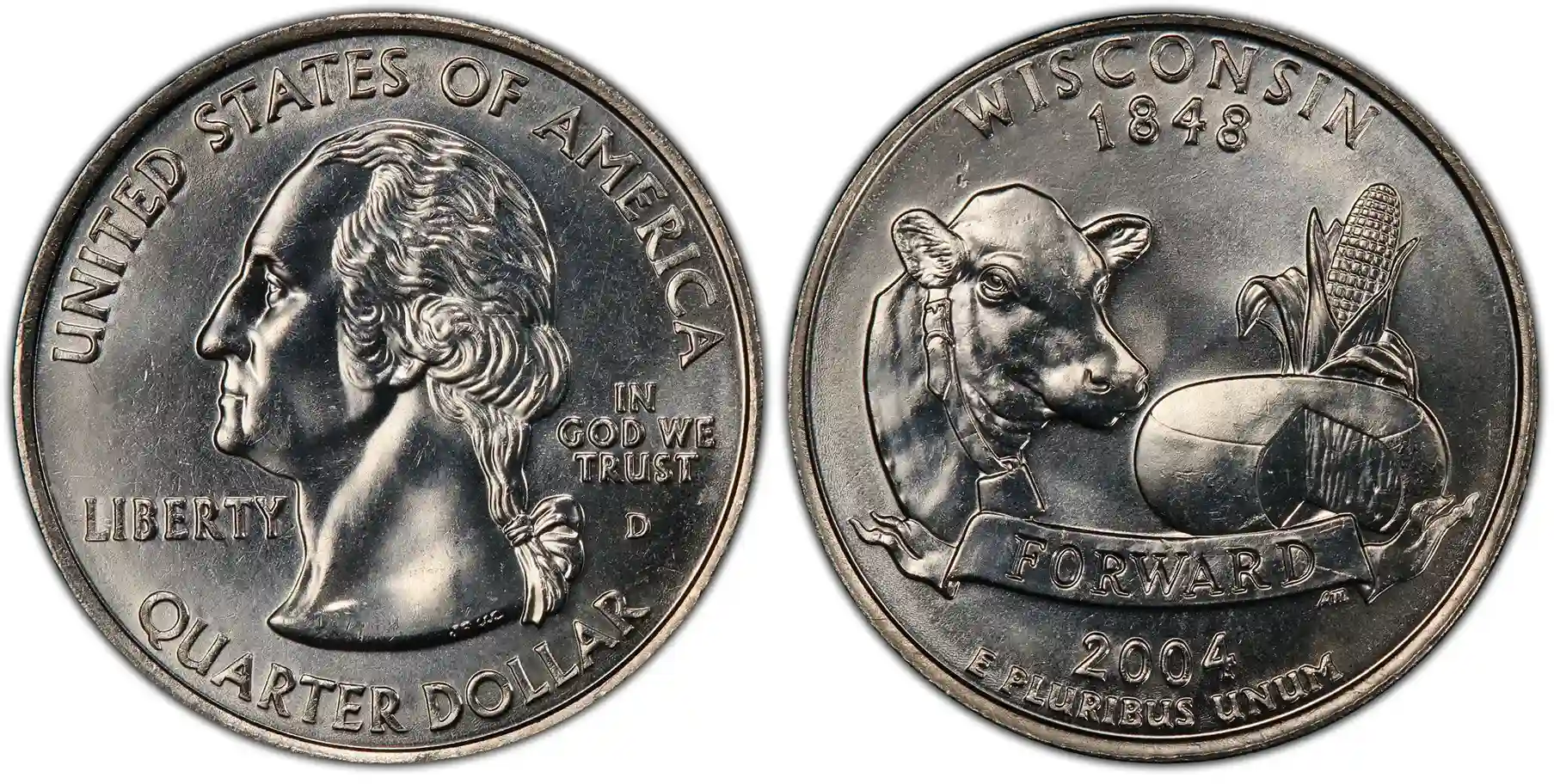
Wisconsin 2004 D Extra Leaf
This coin is a famous error in modern US coin history. Collectors found an extra leaf near the corn ear on the Wisconsin state quarter reverse side. People buy two different leaf varieties.
The high leaf variety shows a clear leaf pointing up. High leaf coins in MS65 state have a $100 to $150 market worth. The record price reached $6000 for a perfect MS67 coin during a 2020 auction. Raw high leaf coins in average condition sell for $40 to $70.
The low leaf variety shows a lower leaf pointing down. Low leaf coin prices range between $50 and $90 for average uncirculated quality. Better MS67 coins reach a $2500 to $3000 price. Circulated low leaf coins have a $20 to $35 market worth.
Wisconsin extra leaf prices grow by 5% to 7% every year. Professional PCGS grading or NGC grading makes these quarters sell fast. Uncertified coins bring lower buyer bids. Collectors pay less money for scratched examples.
Denver mint workers struck these coins with worn dies, creating unique leaf shapes. Coin searchers still find these errors in old coin rolls. Buyers check the leaf sharpness to calculate the final coin value.
Minnesota 2005 Doubled Die
Minnesota quarters have doubling errors on the reverse side design. Coin searchers see an extra evergreen tree silhouette near the main trees. Specialists list more than fifty doubling varieties.
Small doubling errors have a low $5 to $15 price. Clear doubling errors bring a $50 to $100 price on coin forums. The record price for a top grade MS67 double tree coin is $800. Average uncirculated MS63 coins sell for $20 to $30.
Market demand remains steady for this state quarter. Selling raw coins without professional certification lowers the final coin price by 15% to 20%. Buyers want certified slabs to avoid fake errors.
Oregon 2005 DDR
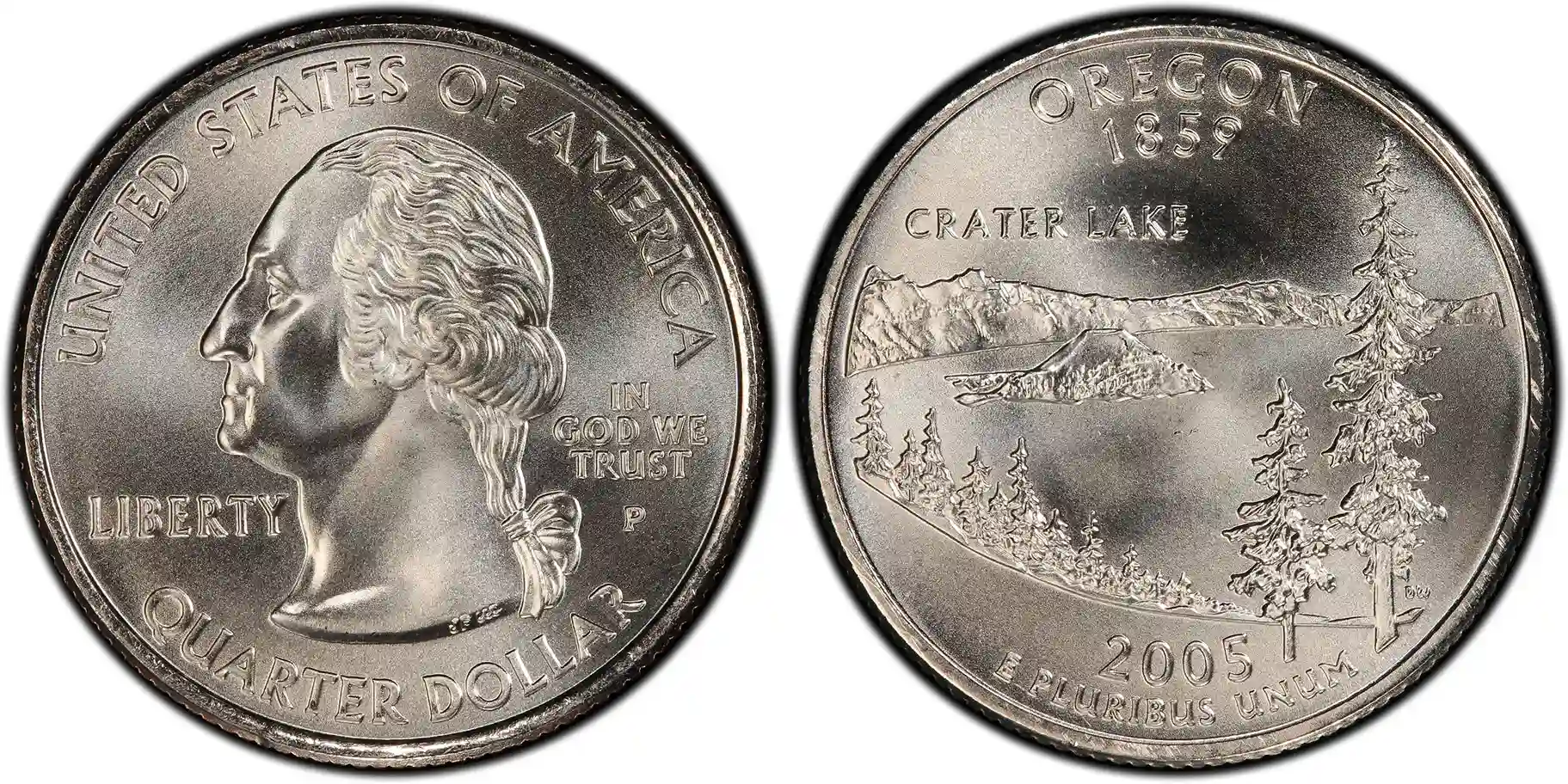
Oregon state quarters show doubling on the Crater Lake design. This double die reverse error is visible on the lake rocks and trees.
Circulated coin searchers get a $20 to $45 coin worth. Nice MS65 coins have a $150 to $200 value. The top record price stands at $1200. Cheap raw examples bring only $5 to $10 on local coin shows.
Oregon error coins have a moderate price growth rate of 3% per year. Coin dealers buy these items quickly because collectors want to complete their state error sets.
Sellers get better prices when they photograph the rock doubling clearly. Sharp images attract online bidders who pay premium money for verified double dies.
Arizona 2008 Extra Cactus
This error happened because of a die crack on the Arizona reverse side. Extra metal looks like an extra cactus branch on the design.
Many collectors find this error, so the cactus price remains low. Standard coins sell for $5 to $10. Choice MS66 coins go for $50 to $70.
The record price is $250 on eBay auctions. Cactus error prices do not grow now because the market has too many coins. Sellers struggle to get high prices for raw Arizona quarters.
Die chips grow larger during the production run. Large cactus branch errors bring $15, while tiny metal bumps have only face value.
Homestead 2015 Double Die
Homestead quarters have double die errors on the Nebraska design windows. Double lines show on the window panes and cabin logs.
Strong double window errors bring a $15 to $50 price. Pristine MS67 coins cost $200 to $350. The record price is $1150 for an MS68 coin. Small double lines bring only $2 to $5.
Homestead window error demand grows by 8% yearly. Weak doubling coins sell for a basic $1 face value. Coin dealers look for the clear snow on the roof doubling variety to get top buyer prices.
Collectors classify these errors by the exact window pane location. Sharp doubling on the center window brings the highest market demand.
Error Type | Coin State | Market Price | Record Price |
Wisconsin High Leaf | MS65 | $100-150 | $6000 |
Wisconsin Low Leaf | MS65 | $50-90 | $3000 |
Minnesota Double Die | MS65 | $40-60 | $800 |
Oregon Double Die | MS65 | $50-80 | $1200 |
Arizona Extra Cactus | MS65 | $15-25 | $250 |
Homestead Double Die | MS65 | $30-50 | $1150 |
Off Center 50% with Date | MS65 | $200-350 | $2800 |
Broadstruck Quarter | MS65 | $50-90 | $950 |
Nickel Planchet Error | MS65 | $500-700 | $3500 |
Double Strike | MS65 | $300-500 | $4500 |