
Is the 1976 Silver Dollar Really Silver?
The United States government started a special program for the two hundredth birthday of the country by producing many millions of commemorative coins for people living in America.
The Eisenhower dollar, issued during the years 1975 and 1976 features a unique design showing the Liberty Bell placed over the moon on the back side of the coin.
Many people looking at these large metal objects want to know the exact material used during the production process at the United States Mint facilities.
The answer to the question about silver content depends entirely on the specific mint mark located above the date on the front side of the dollar.
Most coins found in daily cash transactions contain zero percent silver because the government used a mixture of copper and nickel for general circulation — of course, it affects the REAL 1976 silver dollar value.
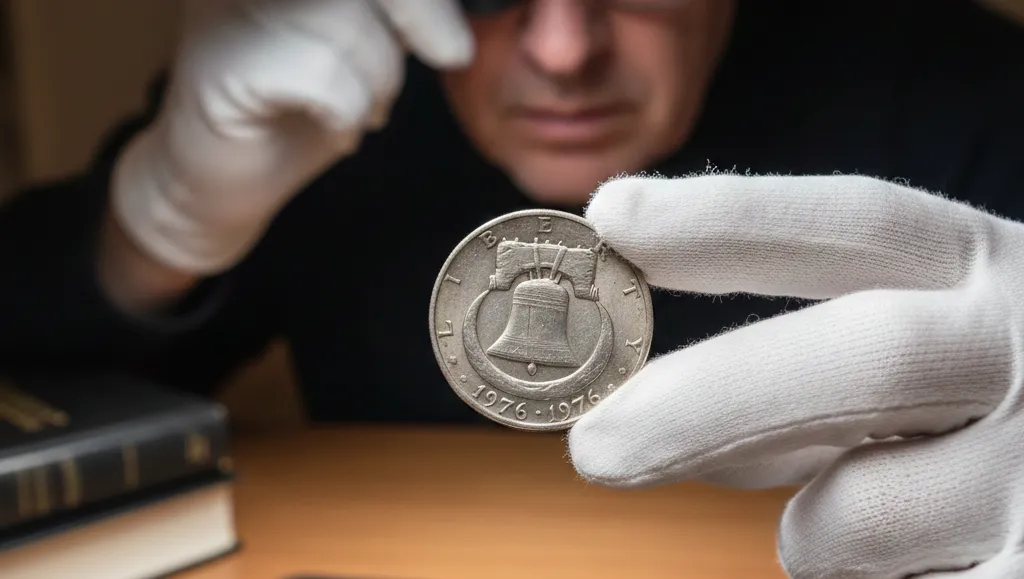
Mint Marks and Production Locations
The Philadelphia Mint produced millions of Bicentennial dollars having no letter on the front side to indicate the origin of the coin.
These coins without a mint mark consist of a core made of pure copper covered by layers of copper and nickel alloy.
The Denver Mint used the letter D to mark its production of Bicentennial dollars containing exactly the same copper and nickel materials as the Philadelphia version.
Collectors finding a coin with the letter S must look closer to determine the silver content because the San Francisco Mint produced two different types of dollars.
One type of S-mark coin contains the standard copper-nickel layers used for the regular circulation coins found in banks.
The second type of S-mark coin contains forty percent silver by weight, being sold originally in special blue envelopes or brown plastic cases for collectors.
Checking the edge with the coin identifier app serves as a primary method for identifying the internal metal layers without using expensive laboratory equipment.
A solid brown or orange line visible on the edge indicates a copper core, proving the absence of any silver inside the metal structure.
A solid silver-colored edge without any brown line suggests the presence of silver throughout the layers of the dollar.
Feature | Copper-Nickel Clad Version | 40% Silver Clad Version |
Mint Marks | None (Philadelphia) or D (Denver) | S (San Francisco) |
Weight | 22.68 grams | 24.59 grams |
Edge Appearance | Visible brown copper layer | Solid silver-white color |
Silver Percentage | 0% | 40% |
Intended Use | Daily business transactions | Collector sets and proofs |
Diameter | 38.1 millimeters | 38.1 millimeters |
Properties and Weight Differences
Using a digital scale provides the most accurate way to separate the silver coins from the common base metal coins.
The copper-nickel Bicentennial dollar weighs approximately twenty-two point sixty-eight grams when measured on a calibrated machine.
The silver-clad Bicentennial dollar weighs approximately twenty-four point fifty-nine grams, being significantly heavier due to the density of the silver metal.
Finding a coin weighing more than twenty-four grams indicates a high probability of owning the 40% silver version.
The thickness of the coin remains the same for both versions, making the weight the most reliable physical indicator for a person lacking chemical testing tools.
Many people find coins in old boxes, hoping to discover a valuable silver piece among the common currency.
Looking at the surface of the coin reveals different reflection patterns depending on the metal used during the pressing process.
Silver coins often have a softer and whiter appearance compared to the grey and hard look of the nickel-clad version.
Bicentennial Coinage Program
The United States Congress passed a law in 1973 to authorize the creation of special designs for the quarter, half dollar, and dollar.
Artists participated in a national competition to choose the best symbols for the back of each commemorative coin.
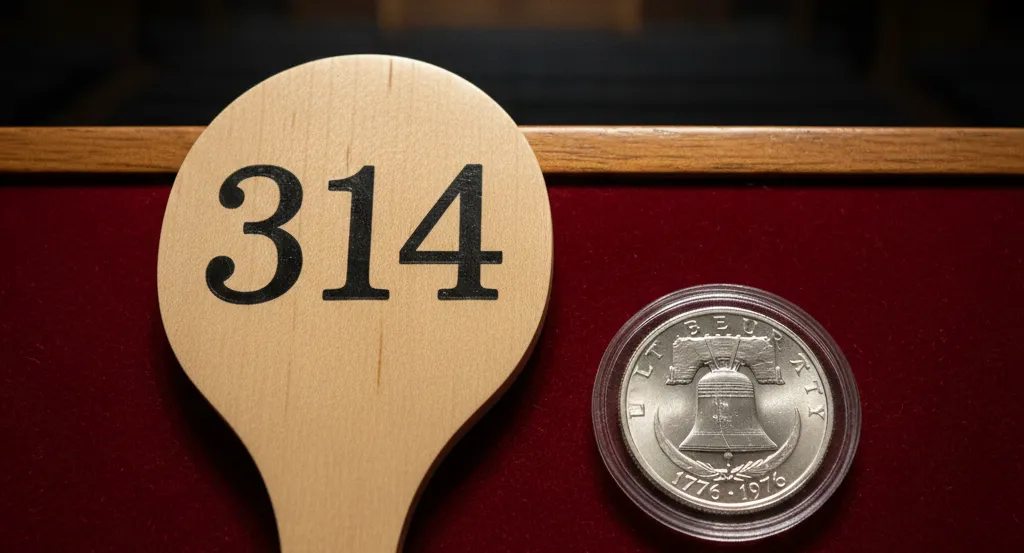
Dennis R. Williams designed the moon and Liberty Bell image for the dollar, representing the history and the future of the American people.
The Mint produced these coins during both 1975 and 1976, resulting in all coins carrying the double date of 1776–1976.
No dollars carrying only the date 1975 exist because the government wanted to maximize the number of Bicentennial designs available for the public.
Storing millions of these coins in bank vaults, the government ensured that every citizen could find a piece of history in their pocket.
The silver versions stayed mostly in the hands of collectors, never entering the general circulation for buying food or supplies.
Individuals buying these sets from the government paid a premium price above the face value of one dollar.
Maintenance and Storage
Owning a silver coin requires special care to prevent the metal from turning black or dark grey over time.
Silver reacts with sulfur in the air, creating a layer of tarnish that changes the visual appearance of the surface.
Keeping coins in airtight plastic holders prevents this chemical reaction from occurring by blocking contact with the atmosphere.
Avoiding the use of chemical cleaners is important for maintaining the original value of the coin in the eyes of professional collectors.
Cleaning a coin with soap or acid often leaves small scratches, reducing the grade and the potential selling price in the future.
Handling the coin only by the edges prevents natural oils from the skin from touching the flat surfaces of the metal.
Storing the coins in a cool and dry place protects the luster, keeping the coin in the same condition as the day of its production.
Many collectors use special albums made of materials that do not contain acid or harmful chemicals.
Key Factors for Owners
Check the mint mark with a coin value checker app to see if it has an S, indicating a San Francisco origin.
Examine the edge for a brown line, showing a copper core and zero silver.
Use a scale to see if the weight is near twenty-four point six grams.
Observe the color to find a bright white reflection instead of a dull grey.
Look for original government packaging like blue envelopes or plastic sets.